Patricia Temples Photography

MAKE IT AN ADVENTURE! All rights reserved.

Archive for the category “ADVENTURES”

Highland County, Part 2: Doe Hill and Bolar Springs

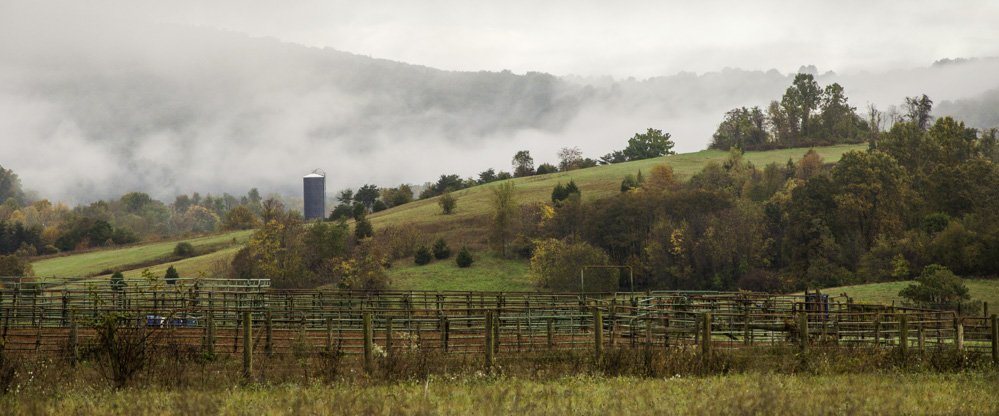
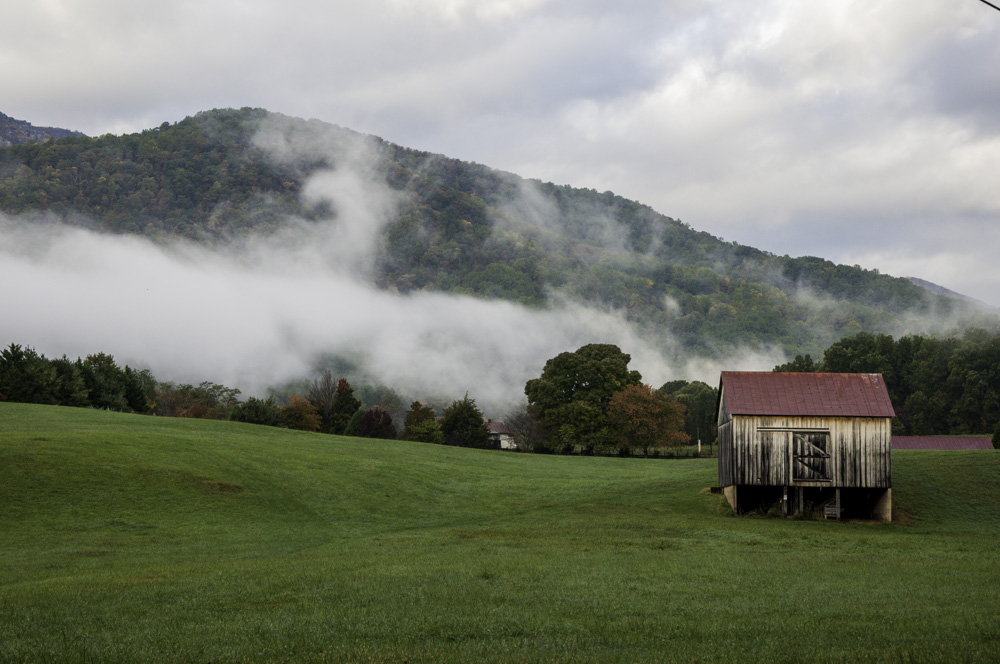
On my second day in Highland I covered a lot of ground. I started the day following the fog in the Bullpasture Mountain region, up Doe Hill Road and across Jack Mountain. The fog was so amazing. The ride across Jack Mountain was on a narrow, gravel road, but there weren’t many views of the valley below because of the trees. That’s a trip for another season.

As I proceeded up Doe Hill Road, I found an old cemetery and that held my attention for quite a while. The tilted headstones, the fog in the background, even the power lines were beautiful. I entered Pendleton County, West Virginia briefly, but my quest was the fog of Virginia, so I turned around.

Barn at sunrise

Driving up Doe Hill Road as the sun tried to make its way through the fog.
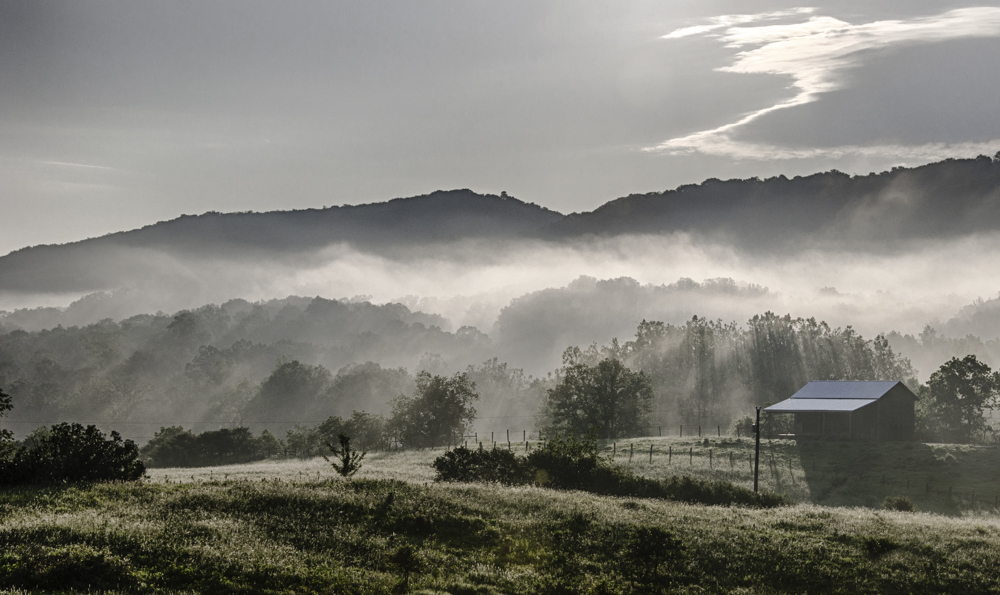
Barn at sunrise in fog

The sun’s rays through the fog provide a special mood to this photograph.
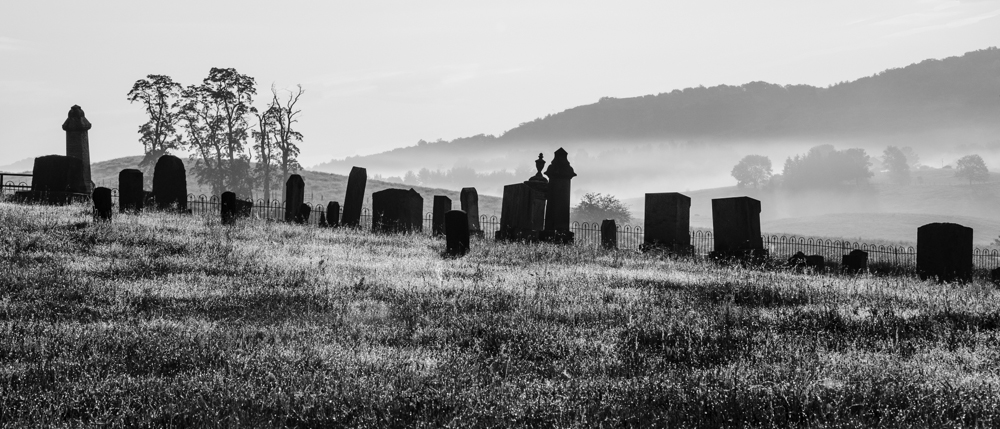
B&W Cemetery 2

The old cemetery on Doe Hill Road.

After I crossed Jack Mountain, we were on Route 220, so we headed south to Bolar Springs. My travel companion and guide was an old friend who has been living in Highland County for a year, growing veggies in a new greenhouse and learning the ways of the Highland County bureaucracy as he starts his new business. He told me that Henry Ford created a camp community around the natural springs in Bolar. A talk with locals earlier that morning had revealed to me that the springs have healing power. They are always at 73 degrees, and even thought the algae and undergrowth in the pool is not appealing, apparently it is good for what ails you. One of the locals said he got in the pool to take care of the itching and blistering of poison oak and it did indeed work. My travel companion soaked a wound on his foot that wouldn’t heal and three days later, he had scabs and the wound cleared right up! The camp is not used anymore, but the folks who live in Bolar keep it mowed and tidy.
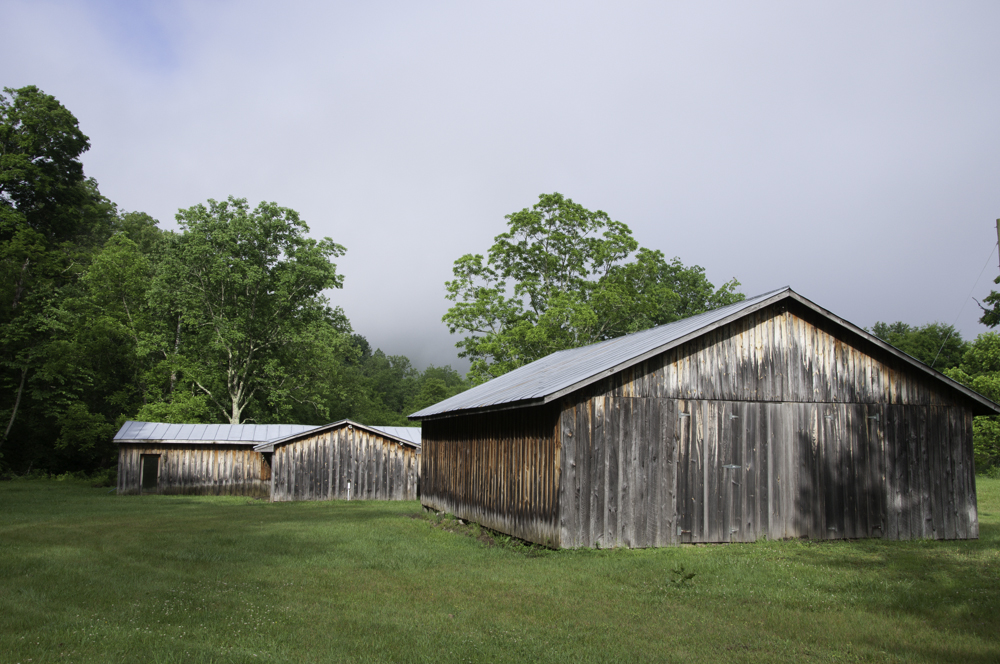
Bolar Springs 1

Old buildings in Bolar

Bolar Springs 2

The spring comes in at the top of this image and fills a man-made pool, then overflows into a creek. There is a lot of water coming in from that spring.

Bolar Springs 3

This is the entry into the natural springs pool.
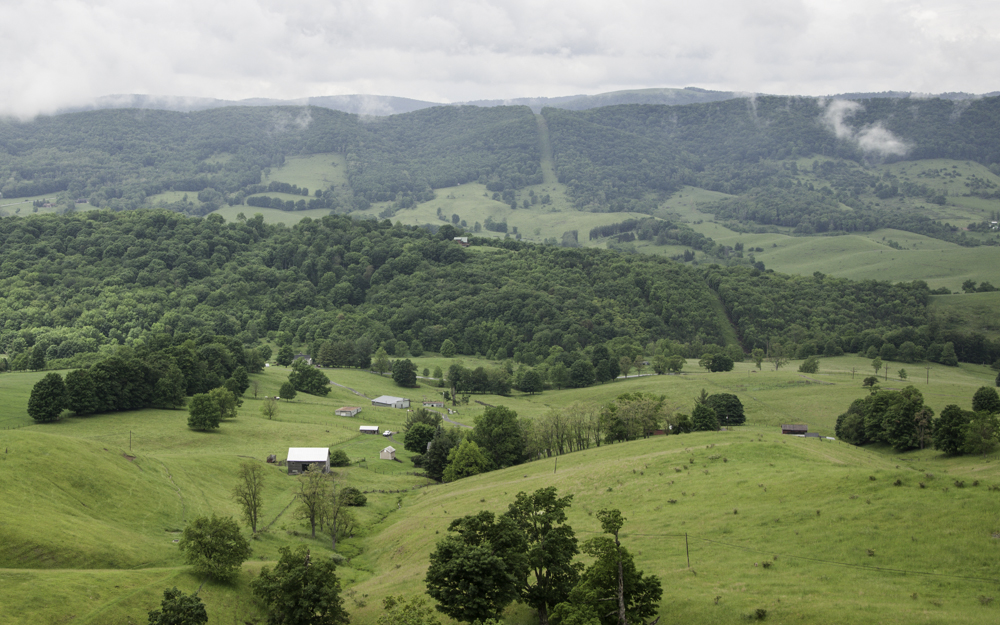
Highland County Adventure

I went on a weekend trip to Highland County, Va in early June. I have been there before in late winter/early spring for the Maple Sugar Festival, and I have made brief trips into the county at other times. This is the first time that I have covered a lot of the county with my camera in hand. I have a lot of photos from different regions of the county, so I will have two or three posts on this blog to break it up and show you more of what I saw.

First, a little history. Highland County has the sixteenth highest average elevation among counties in the Eastern United States. It is bordered on the west by the Allegheny Mountains and on the east by the western border of the Shenandoah Valley and parts of the George Washington National Forest are contained in its borders. The headwaters of the James and Potomac Rivers are located in Highland, which has sometimes been called “Virginia’s Little Switzerland.”

Highland is the least populous county in Virginia and the 115th least populous county in the entire United States. As of the 2010 census, there were 2321 people in the county, and only a little more than 200 students in the school district, also the smallest in number in Virginia.

There are several stunningly beautiful regions of Highland County: Blue Grass Valley in the northwest area of the county, the Big Valley in the south, and the Bullpasture Mountain region, which was my home base on this trip. Monterey is the county seat, and the small village of McDowell has Civil War history.

I am going to start with Blue Grass Valley. I visited there twice over the weekend,  and saw most of it in those two trips. Here are some images from that area of the county.

Hightown view 2

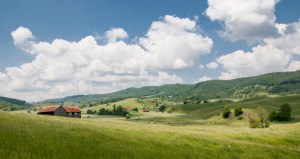
Blue Grass Valley as viewed from Hightown, west of Monterey.

Hightown view 3Hightown view 4 expanse Hightown view 5

Blue Grass Valley

Down in Blue Grass Valley with the Allegheny Mountains to the west.

Blue Grass Red and Blue

In the town of Blue Grass, I found a very patriotic house.

Blue Grass Valley 2

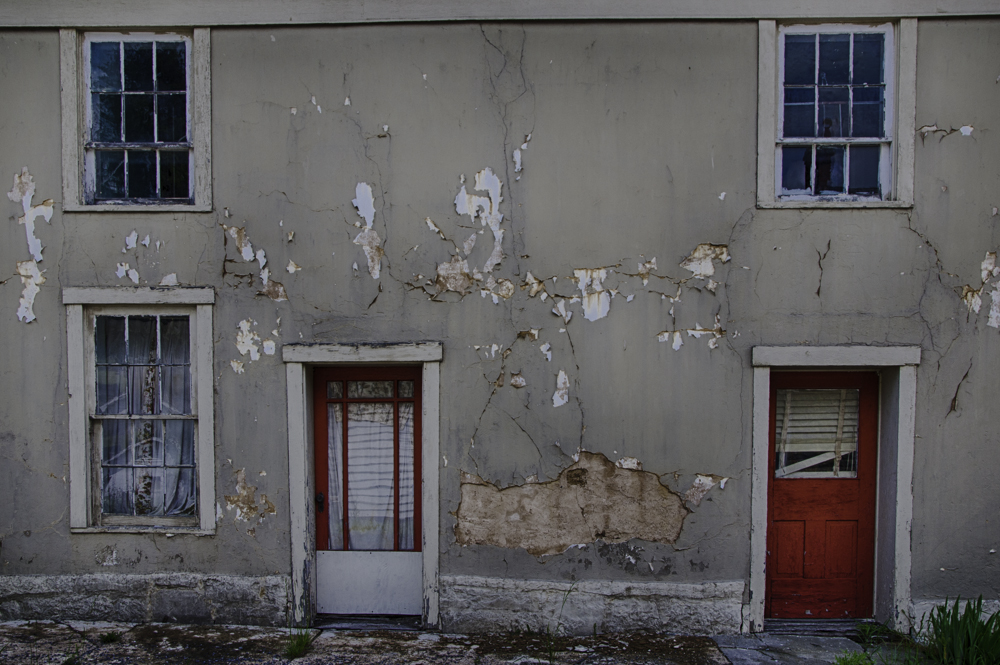
Red door in Blue Grass

Patriotism abounds on the other side of the house.

Red Shed in Blue Grass 2 Red Shed in Blue Grass

The Library of Congress

I have had two exciting trips to D.C. to visit the Library of Congress, the first in February and the second last week, in May. A friend of mine is a docent there and she agreed to lead two sets of my friends on a tour. Both trips were so special. I am writing this blog because I believe that the Library of Congress may be the single most important public building in the U.S. I am going to share some history about this building to make this point. Most of the information that follows comes from the website for the LOC, and occasionally I will insert my thoughts or those of my docent friend.
The Library of Congress was established by an act of Congress in 1800, and was described as a “reference library for Congress only.” The initial appropriation of $5000 established the library and it was housed in the new Capitol from 1800 to 1814. In August 1814, invading British troops set fire to the Capitol and burned or pillaged the contents of the library.

After the fire and loss of the library, President Thomas Jefferson offered his personal library as a replacement. He had spent 50 years accumulating books, “putting by everything which related to America,” and his collection was considered to be one of the finest in the U.S. In January 1815, Congress appropriated $23,950 for Jefferson’s 6,487 books. Our docent told us that Jefferson suffered depression for a period of time after his collection went to the library, because his accumulation of books was so very important to him.

The Library of Congress had difficult times in the 1850s. On Christmas Eve, 1851, a fire destroyed two-thirds of its 55,000 volumes, including two-thirds of Jefferson’s library. When the restoration of the Library room in the Capitol building was done, fireproof materials were used throughout and it reopened in 1853.

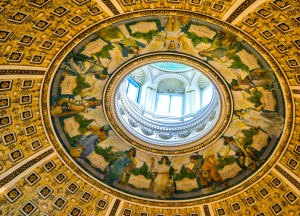
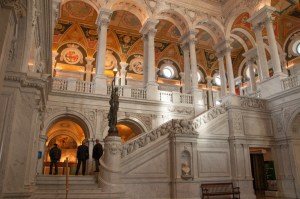
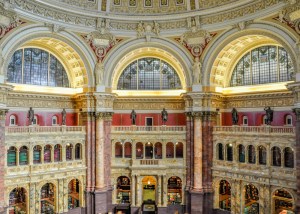
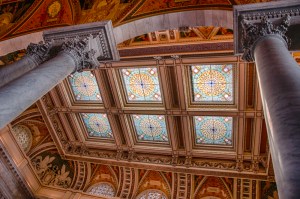
In 1886, after many proposals and much controversy, Congress authorized the construction of a new library building, and its doors were opened to the public on November 1, 1897. The construction of the new Library was executed entirely by American labor and American artists. It became a showcase of American skill and talent. It is one of the most beautiful buildings I have ever seen. The Library of Congress is the largest library in the world with more than 160 million items, including books and other print material, recordings, photographs, maps, sheet music and manuscripts. Staff receives 15,000 items each working day and adds approximately 12,000 items to the collections daily. LOC is the home of the U.S. Copyright Office, and many of the collections are received through that registration process. Contrary to what I expected there, a visitor does not see books and more books. They are not housed within public view and access is restricted to official passes. However, it is possible to get passes, or to have books sent to your local library from the LOC, with the exception of rare books. Enjoy my images of the spectacular interior of the Jefferson Building. Notice the marble, the mosaics, the statues, the moldings. Everything in the building has meaning. Then put a trip to the Library of Congress on your bucket list.

Dome Interior

Jefferon Room at LOC

The Jefferson Room is one area where you see books. Some are originals from Jefferson’s library, some are replacements since the fire, and some are empty boxes waiting for a replacement to be found. They are protected by glass.

Reading room

The reading room is accessible by passes. Visitors can view the room from an area above that enclosed in glass. It is such a spectacular space.

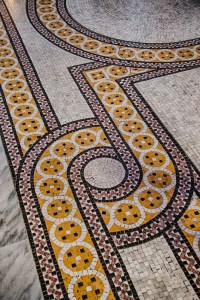
Mosaic Floor

Small pieces of marble tile create the mosaic floor.

Changing of the Seasons

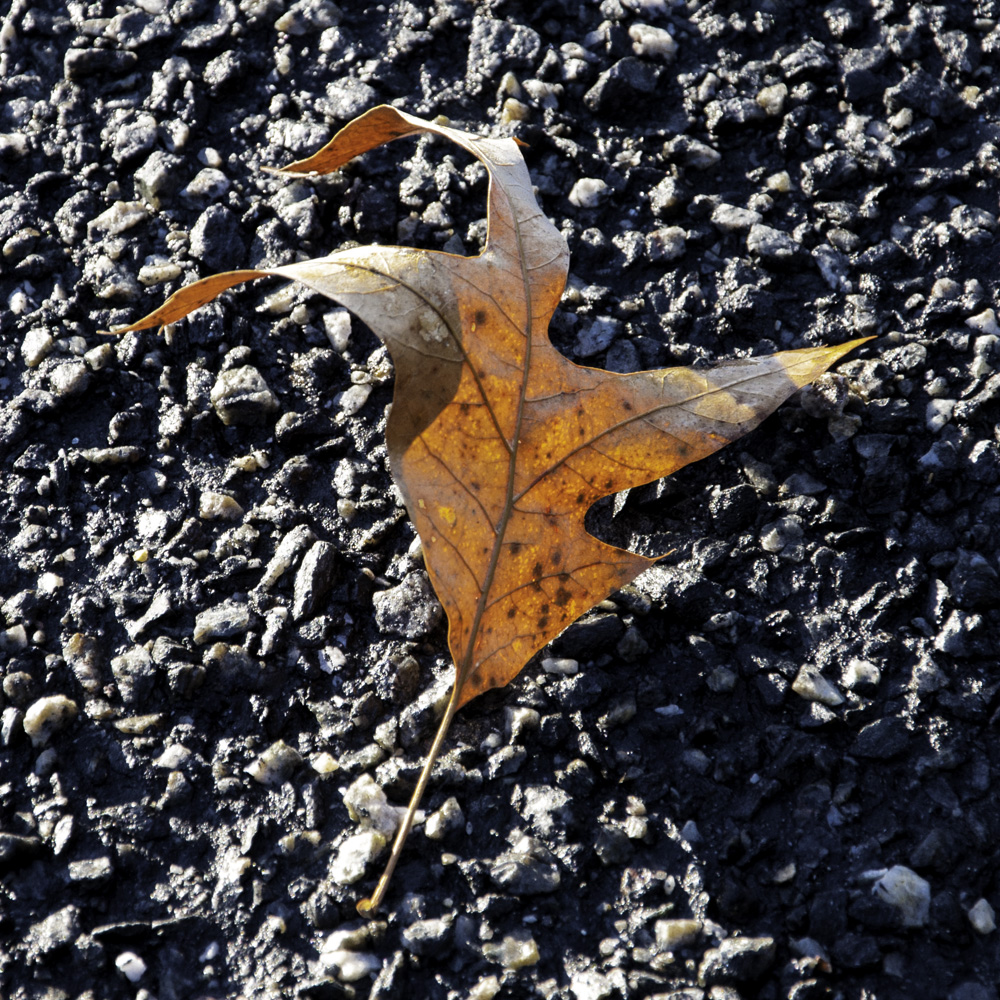
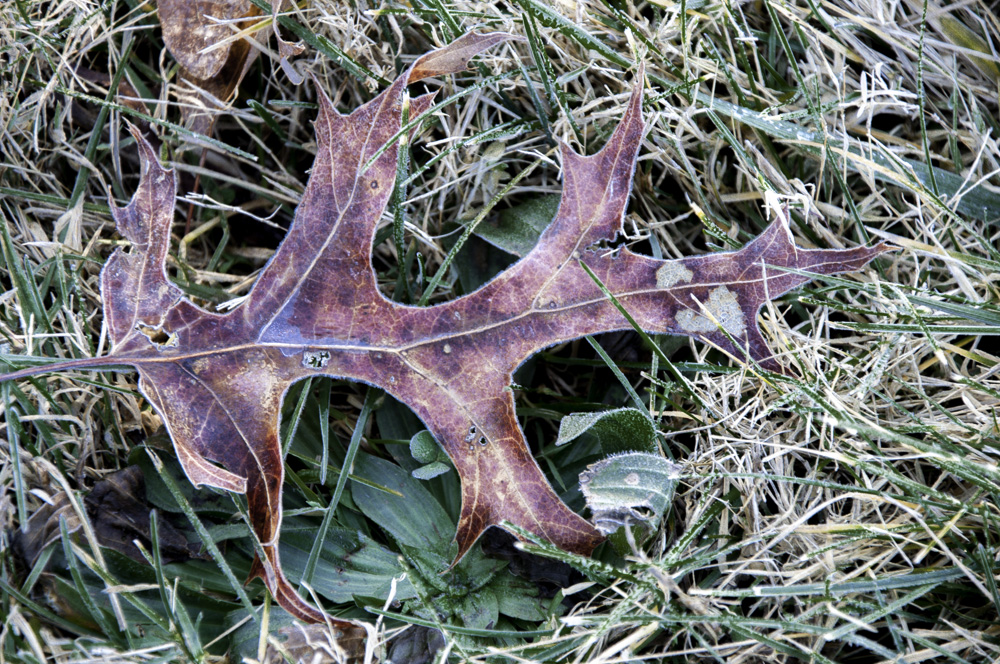
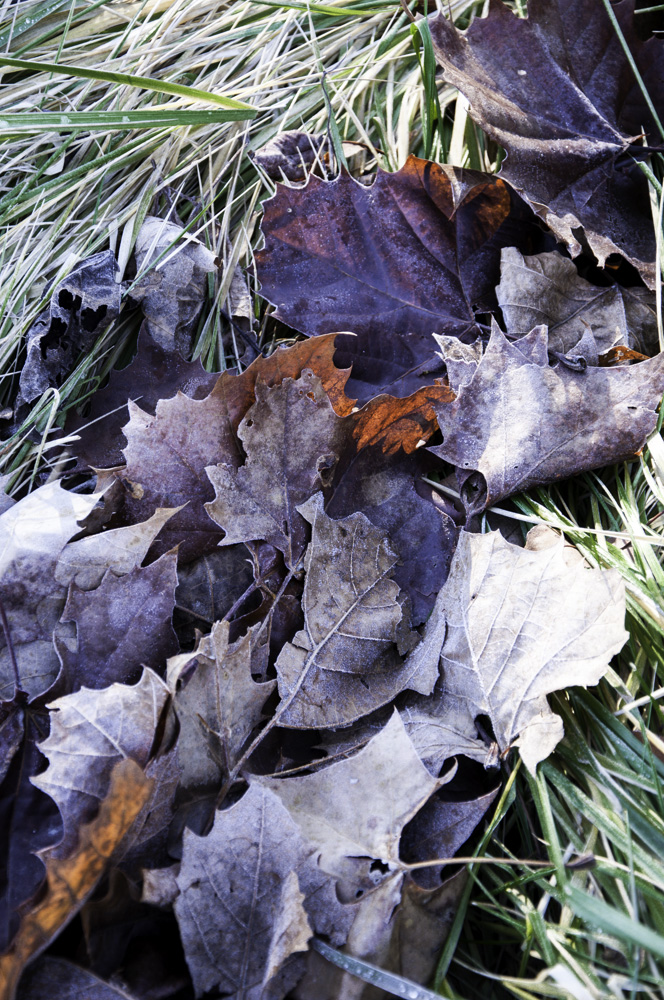
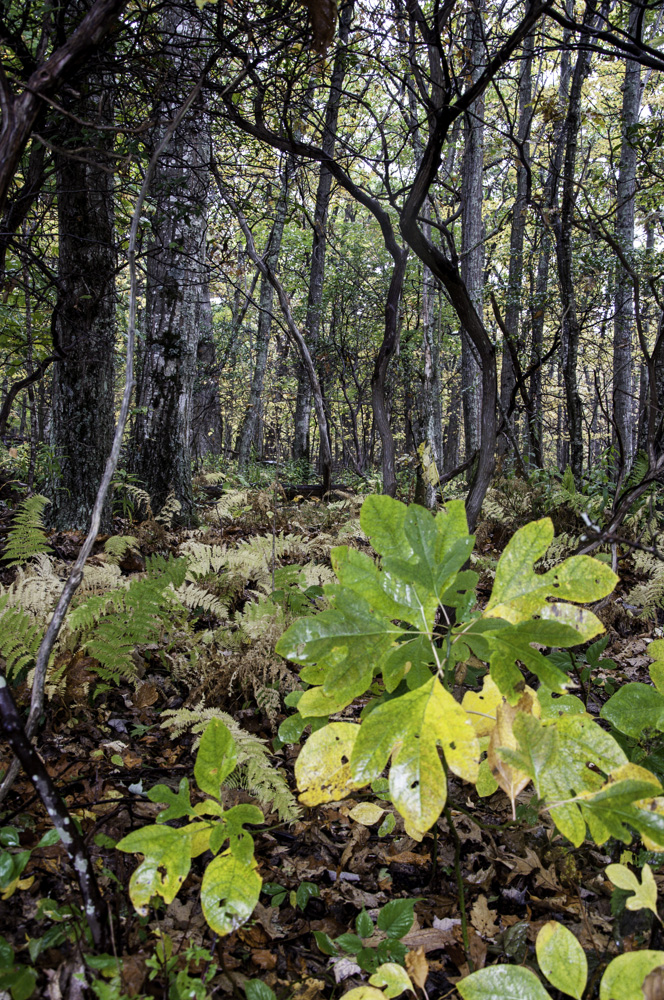
This morning I went for a walk as I sometimes do on my private road.  This time I had my golden retriever Jesse, and a guest dog, Frannie, who belongs to my stepson, along for the adventure.  I also took my camera because I had spotted a lot of birds this morning and wanted to capture some of them. On the walk, I didn’t see birds, but I saw leaves.  All shapes and colors, some with ice on them, many still showing the colors of fall even though winter appears to be close by.  When you are a photographer, it’s good to set a theme for your shooting, then try to find as many different ways to capture it as possible.  Today is was LEAVES.  I hope you like what I found.

More Fog in the Shenandoah National Park

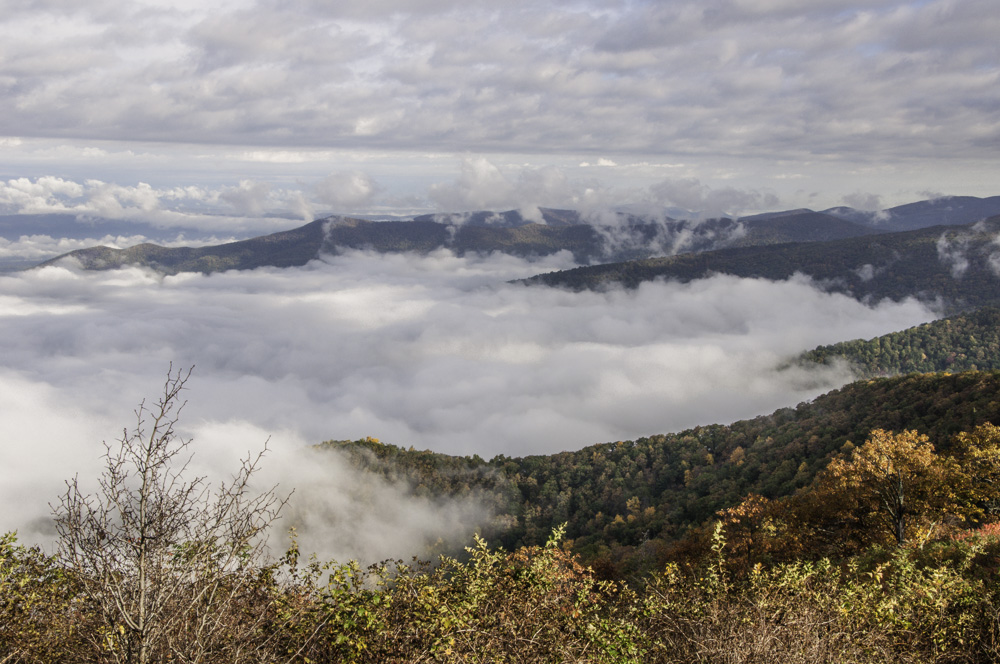
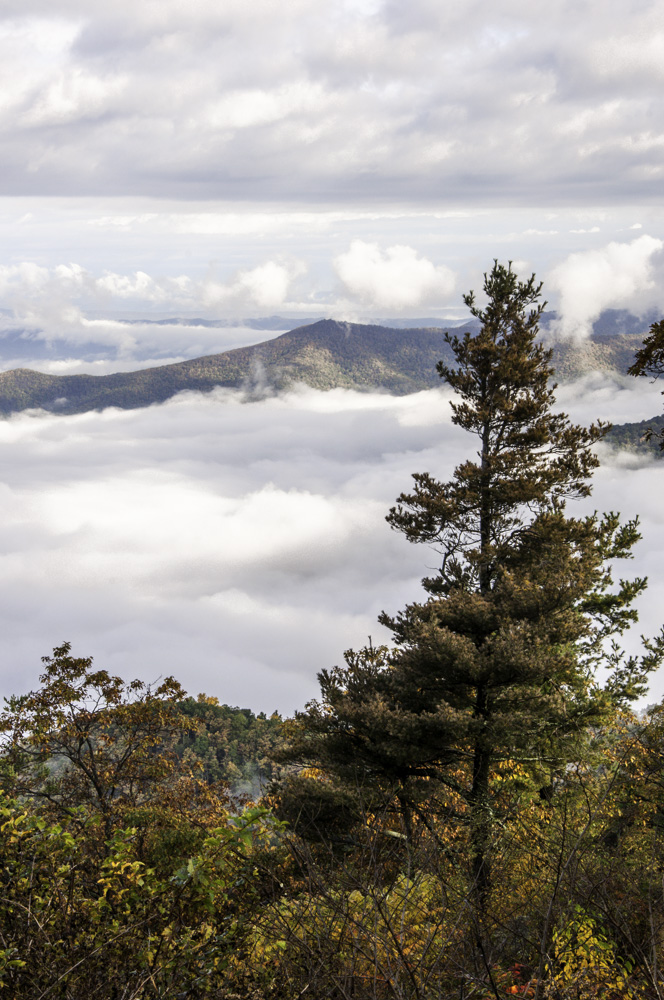
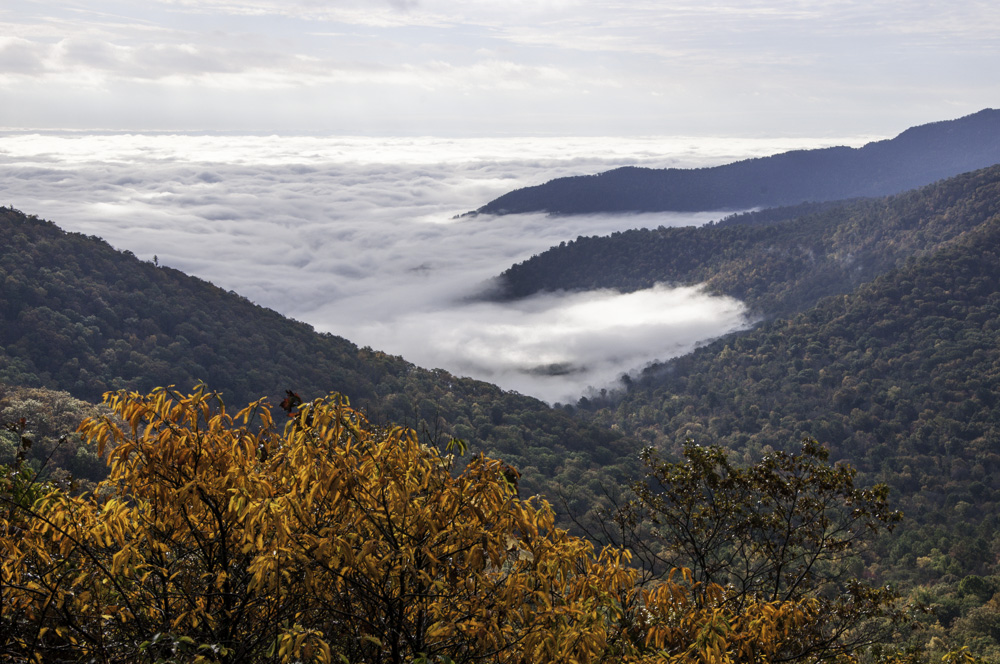
I headed out a few days ago to Shenandoah National Park on a morning when the fog was so thick at my house that I couldn’t see the road in front of me.  But, I sensed that when I got out of the foothills and up into the mountains, I would have some awesome photography opportunities.  What a morning it was!  I drove north to the little town of Sperryville and found spotty fog along the way. Then I drove through the clouds into the Park where I found sunny skies and dense clouds below. I stopped often as I headed south toward Big Meadows. When I arrived at the meadow, the fog and cloud cover were so thick that there were no photo ops. In a matter of four hours, I felt that I had spent several days on Skyline Drive because of the changing conditions.  But, it did not disappoint me.  The Park never does.

Champe Plain Road

In the valley below SNP

Sharp Rock Vineyard View

Also in the valley, near Sharp Rock Vineyards.

From the car

Driving along Skyline Drive

Tunnel near Thornton Gap

The tunnel just south of the Thornton Gap entrance to SNP

Layers of Fog

Tree and Big Fog

Thick clouds

Sea of Fog

Clouds were filling the gap in the mountains.

A Day in the Park

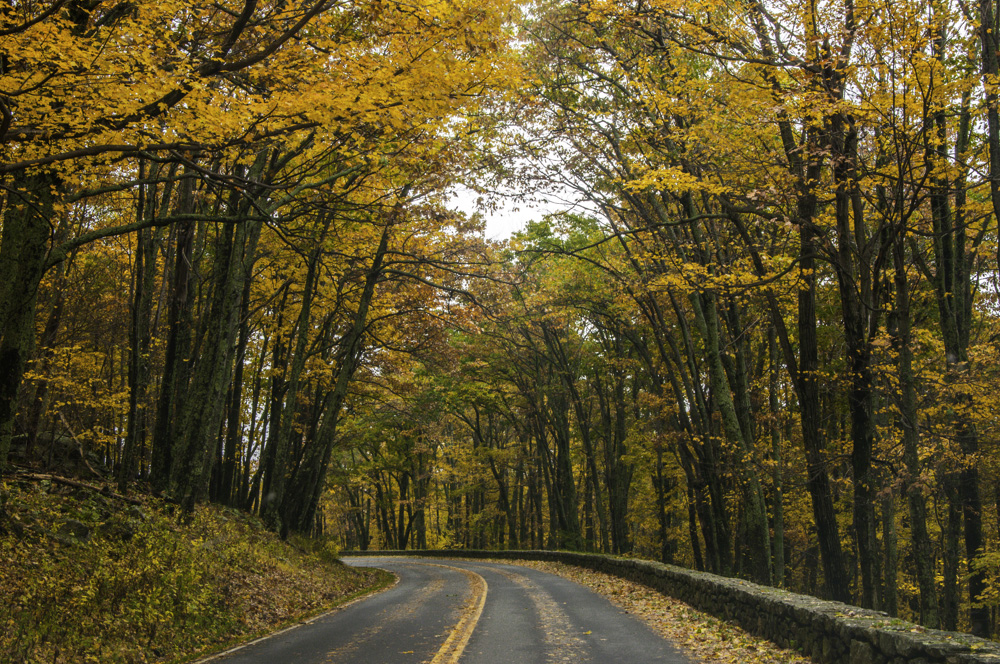
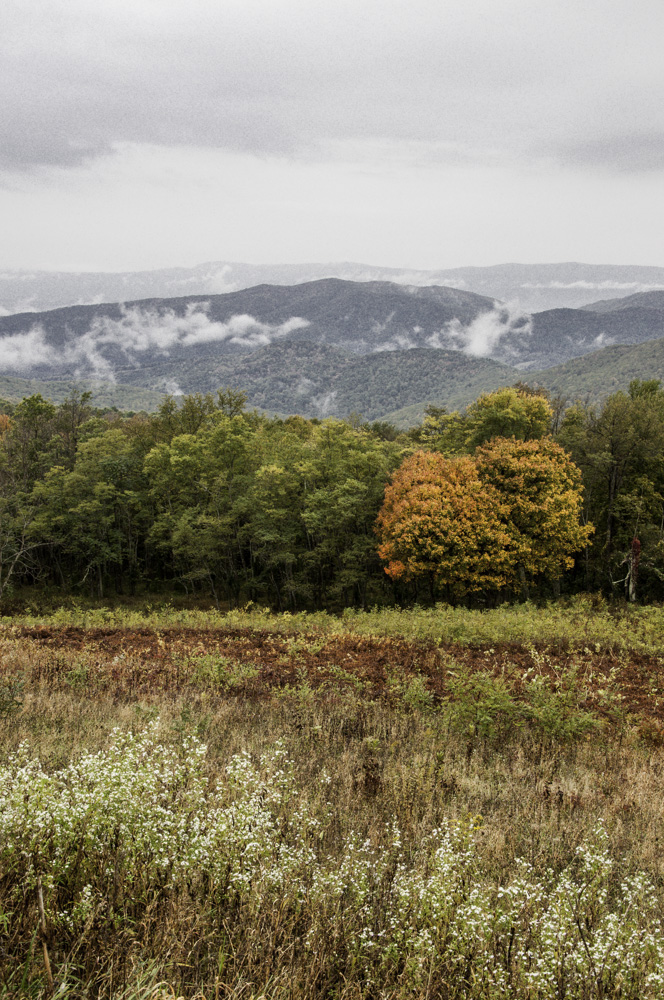
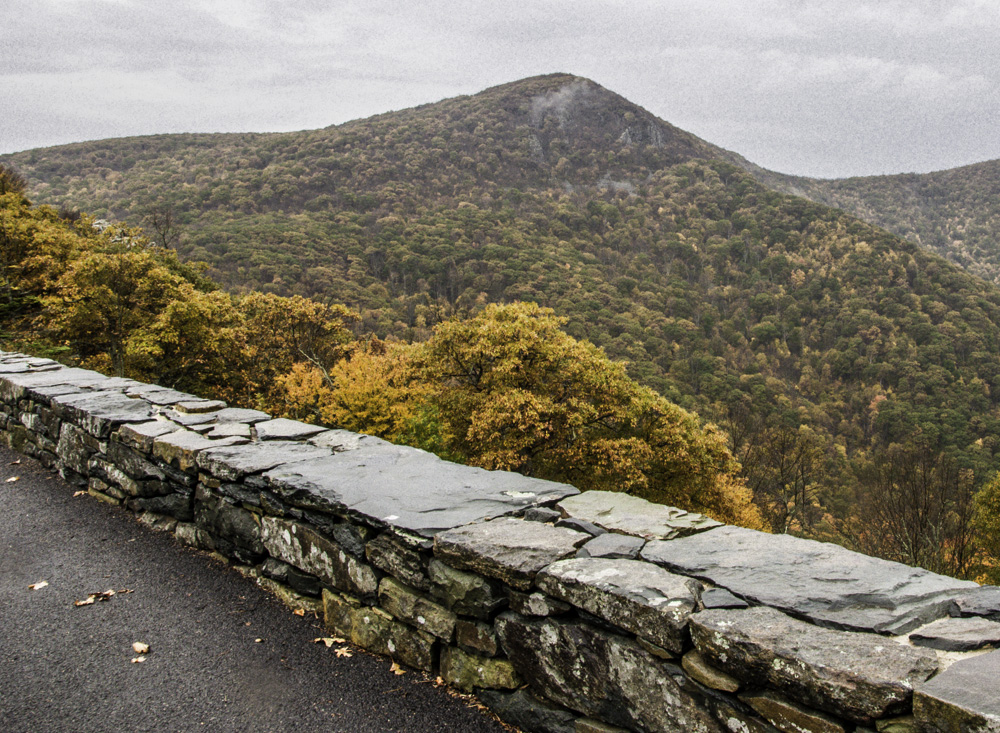
What could be better than a drive into Shenandoah National Park in the fall?  A drive in the fall on a rainy day.  It was so beautiful today in the mountains with the thick clouds and fog below us, the colors around us and the glistening of the raindrops on everything.  I was so happy to see some out-of-state cars on Skyline Drive because I felt that today was the kind of day I want to share with non-Virginians. This is why I love Virginia.

View from under the tree Wildflowers and mountains Mountains, fog and fall colors Rocks, mountains and fog 2 Rocks, mountains and fog 3 Rocks, mountains and fog Rugged peak Sassafras

Post Navigation

Our Cape Escape

renovation realities

The Mansurovs

Digital Photography Tips, Recipes, Technology and Photographs from The Mansurovs

Perception

Photography. Life.

cookiecrumbstoliveby

Life through the eyes of "cookie"

The Legion of Door Whores

...for those who appreciate doors...

Ray Ferrer - Emotion on Canvas

** OFFICIAL Site of Artist Ray Ferrer **

Belle Grove Plantation Bed and Breakfast

Birthplace of James Madison and Southern Plantation

Leaf And Twig

Where observation and imagination meet nature in poetry.

Firnew Farm Artist's Circle

We meet weekly, and host: Review & Critique of New Works. Our Annual Spring Show is in May and our Annual Fall Show is September - October. Contact: Trish Crowe 540 948 3079

John Berry Photography

Portrait, Sports, Landscape Photographer in Central Virginia

CJ's Workshops

FILM INSPIRES!