Patricia Temples Photography

MAKE IT AN ADVENTURE! All rights reserved.

Archive for the category “ADVENTURES”

Spring in Virginia?

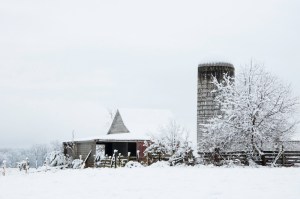
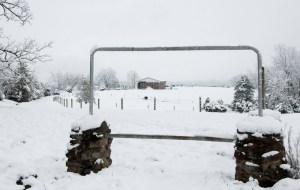
What a difference a couple of days can make.  Two days ago I posted images from a trip to Rapidan when the sky was blue, there were wonderful cirrus clouds and temps rose quickly from the upper 20s to the 50s.  Today we have six inches of snow on the ground and temperatures are staying around 35 degrees.  Snow occasionally falls.  But, the roads are clear, so I spent four hours out in the winter wonderland of March 25th.  Some images are again of Rapidan and some are of places nearby.

A Study in Lines

Red Tractor

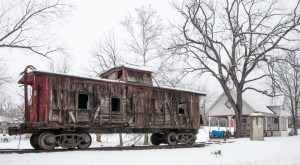
Caboose in Rapidan

Caboose in Rapidan

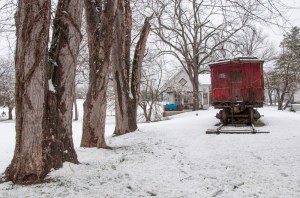
Caboose and Train Station

Train Station and Barns

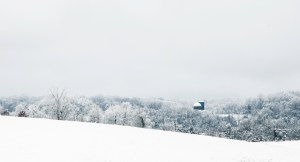
Silo at the Parrott Farm

Barn at the Parrott Farm

A Study in Shape

Silo at the Parrott Farm

Barn and Silo at the Parrott Farm

The Haney Farm

Framing the Scene

Rapidan Adventure

Today I ventured about twenty miles from my home to the little historic community of Rapidan.  i had only been there once before, in the dark, and I had no idea what awaited me.  What a special treat that little place is. I am going to quote from a document created by the Rapidan Foundation so that my facts are correct.  Early residents of Rapidan were millers who began to use the Rapidan River as a source of power. It was known then as Waugh’s Ford. “In 1853 the Orange and Alexandria Railroad laid track and opened a passenger station, freight depot, and a Post Office. The village began to form and the name was changed to Rapidan Station. With Grant in Culpeper and Lee in Orange County for the winter of 1863-64, this section of the Rapidan River was unofficially an “international” boundary between the North and the South. The railroad bridge in Rapidan was constantly under attack by Union troops and just as constantly being repaired by Confederates.”  Rapidan’s maximum population occurred between 1930 and 1950, but declined after that time.  In 1987 the village was listed in the National Register of Historic Places and the Virginia Landmarks Register.

My images will show you but a part of the charm of this little village.  Some are infrared and some are with my “normal”  Nikon camera.  The fun today was to have both swinging off my shoulders so I could switch back and forth at will.  We met people along the way.  At each church we encountered someone who invited us inside. You bet!  At the country store, the gentleman working there, a native of Culpeper County, shared information about the old mill, the current PO, which used to be a bank, and other tidbits.  The Old Mill, which was a wooden building, burned in 1950 and was rebuilt as a concrete structure.  Today it is a small hydroelectric plant.  Everyone was friendly and proud to be from Rapidan.  As in all small communities, the word will spread about who we were and why we were there.  I love it.
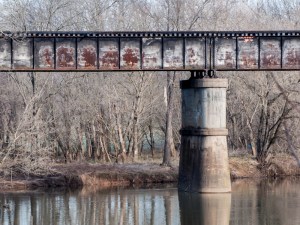
RR Bridge over the Rapidan

RR Bridge over the Rapidan

Old Mill

Old Mill

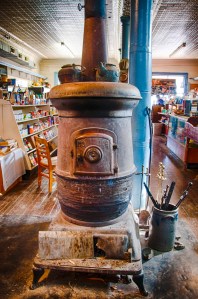
Old stove in Country Store

The man at the store says this stove is over 100 years old.

This is a close-up of the caboose
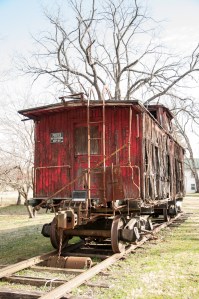
The old wooden caboose
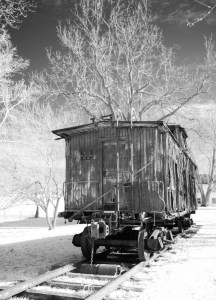
Caboose in Infrared

Caboose in infrared

Waddell Presbyterian Church in Infrared
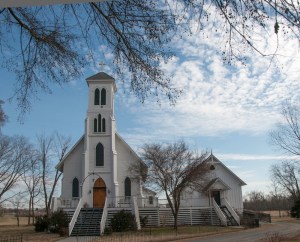
Emmanuel Episcopal Church
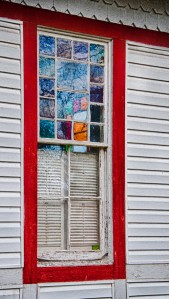
Window in the Old Train Depot
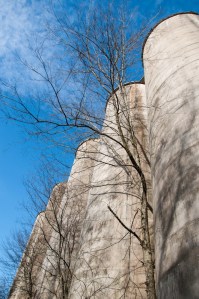
Trees Growing at the Old Mill
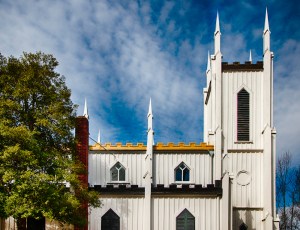
Waddell Presbyterian Church 1874

A Foggy Morning

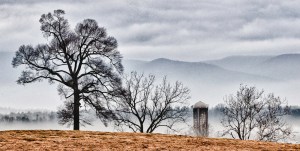
This has been a period of amazing fog in the mornings.  It has been so dense that travel has been treacherous.  I talked myself out of going to shoot two mornings, but this morning my husband shamed me into getting dressed and getting out there.  I didn’t travel far from home, and I quickly learned that I needed to go east because the fog was clearing out in a west to east direction.  It is important for photographers to remember that distant venues are not always necessary to provide interesting images.  In fact, the challenge is to stay close to home and find new ways to shoot old subjects.  So, that’s what I did this morning.

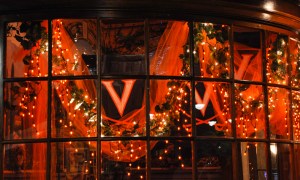
Paint the Town Orange

Three years ago, when I was just getting into serious photography, I went with a friend to the downtown mall in Charlottesville on a Friday night in September….the FIRST Friday night in September.  Little did we know that it was “Paint the Town Orange” night.  That’s what happens on the night before the first University of Virginia home football game.  The mall was full of people of all ages, and as night fell, the activity level rose.  There were people with lighted hula hoops. mothers and dads with their children in strollers, UVA students, the UVA Marching Band and the football team on stage for a giant pep rally.  As photography goes, this couldn’t have been more fun.  Because my friend and I had large DSLR cameras with zoom lenses (not THAT impressive, but what the heck), whenever we approached a new activity to shoot, the crowd would open up a passageway for us to get to the front of the action.  It was truly amazing.  That was the first time I had been aware of how much access a camera will give you in a crowd.  So, we have front row views of almost everything that happened that night.  I’ve never had more fun with a camera in my hand than I had that night, September 2009.

Cheerleader Directing the Band Flautists Hula Hoop 1 Marching Band 1 Marching Band 2 Storefront in the Spirit Team on Stage

Paw Paw Tunnel

On my trip to western Maryland in early November, I had a chance to photograph the Paw Paw Tunnel. Located near the town of Paw Paw, West Virginia, it is parallel to the Potomac River, which is the boundary between West Virginia and Maryland. The tunnel was constructed through the mountain as the most direct way to route the C&O Canal, which runs from Washington, DC to Cumberland, Maryland. The tunnel is 3,118 feet long with a walking path, or a bike path, if you are brave.  The signs on site indicated that if the tunnel had not been cut through the mountain, there would have been an arduous task of creating six additional miles of canal, crossing difficult terrain, the river, and many other obstacles.  It took fourteen years to complete the tunnel, 1836-1850, and it’s lined with six million bricks.  I cannot imagine the hardship.

This slideshow requires JavaScript.

Lonaconing Silk Mill

I had the great pleasure of going on an adventure in western Maryland last weekend.  I had read about the Lonanconing Silk Mill and I knew it was going to be a photographer’s dream.  A group of photographers, armed with flashlights, multiple lenses and tripods, and dressed in layers of warm clothing, spent six hours there on a day when the outside temperatures were in the 40s.  There is no electricity, and therefore no heat or light other than what comes through the windows of this immense building. The silk mill closed in July 1957, and on that day workers walked out, leaving personal belongings, mill records and all the machinery intact. The Lonaconing Silk Mill (originally called the Klotz Throwing Company) is the last intact silk mill in the United States. The mill was responsible for twisting raw silk into thread, and in its early years it created fine silk thread for wedding gowns.  Two world wars and a depression caused ups and downs in the economy and in the production at the mill, ultimately leading to a change to rayon in the early 40s.  During the depression the mill reorganized as the General Textile Mills Company.

My first impression of the mill was that it must have been a noisy place to work.  It was built in 1907, with additions in 1916 and 1946.  Much of the equipment was belt-driven and there are rows and rows of metal that a genius must have designed.  I have no mind for engineering, so it was unfathomable to me how any of this worked.  It didn’t matter, because the shapes, colors, leading lines and odd pieces of personal property were intriguing.  Another thing I suspect about this mill is that most of the workers were women.  I haven’t read that anywhere, but the personal effects left behind seem to indicate that.  Of course, in those days, the management would have been male, and the maintenance of the  equipment would have been done by men as well.  The third thing that is worth mentioning is that the mill has no signs of mice, bats, or any other kind of animal because there is no food or water source. Windows are broken, perhaps by kids practicing their throwing skills, and paint is chipping off the walls and ceilings.  It is interesting to see how a building ages, what changes and what stays intact.  Take a look at my images to see what you can learn about the Lonaconing Silk Mill.

Post Navigation

Our Cape Escape

renovation realities

The Mansurovs

Digital Photography Tips, Recipes, Technology and Photographs from The Mansurovs

Perception

Photography. Life.

cookiecrumbstoliveby

Life through the eyes of "cookie"

The Legion of Door Whores

...for those who appreciate doors...

Ray Ferrer - Emotion on Canvas

** OFFICIAL Site of Artist Ray Ferrer **

Belle Grove Plantation Bed and Breakfast

Birthplace of James Madison and Southern Plantation

Leaf And Twig

Where observation and imagination meet nature in poetry.

Firnew Farm Artist's Circle

We meet weekly, and host: Review & Critique of New Works. Our Annual Spring Show is in May and our Annual Fall Show is September - October. Contact: Trish Crowe 540 948 3079

John Berry Photography

Portrait, Sports, Landscape Photographer in Central Virginia

CJ's Workshops

FILM INSPIRES!